
Understanding Soil pH for Better Vegetable Harvests
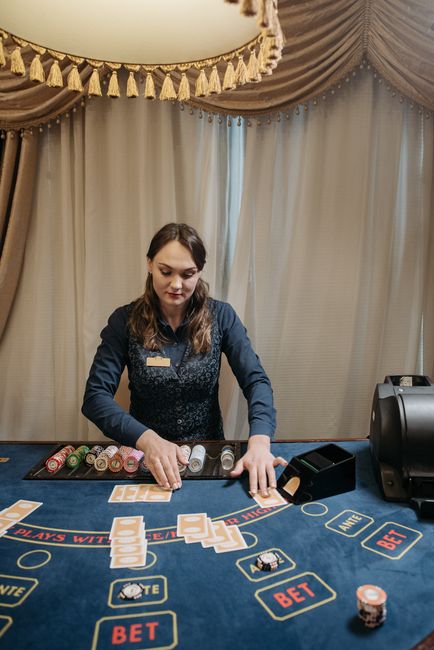
Every gambler has heard the phrase. The house always wins. It gets repeated at blackjack tables, muttered over losing sports bets, and tattooed onto the brains of anyone who has chased a slot bonus into the early hours. And here is the uncomfortable truth: the house does always win, but not in the way most people think. The house edge is real, but it is thin, and understanding exactly how thin is the difference between a player who bleeds money slowly and one who at least knows why they are bleeding.
This isn't a lecture about quitting gambling. If you are reading an iGaming blog, you are probably already in the game. What follows is the stuff that actually matters: how different verticals make their money, where the real edges hide, and the specific mistakes that separate a casual player from a losing one.
Slot Machines: The Maths Behind the Spin
Slots are the most popular game in any casino, online or offline, and they are also the most misunderstood. Most players think the outcome of a spin is random in the sense that anything could happen. Technically true. Practically useless. What actually matters is the RTP (return to player) percentage and the volatility. A slot with 96% RTP returns, on average, $96 for every $100 wagered. That 4% is the house's cut, and it is baked into every spin.
The volatility is where players get surprised. High-volatility slots like Bonanza or Money Train 3 pay out rarely but can produce enormous wins. Low-volatility games like Starburst pay constantly but in small amounts. Neither is better. They are simply different shapes of the same bell curve. The trap is session length. A player on a 96% RTP slot who spins 500 times will usually lose about 4% of their total wager, but the variance means some sessions end up +200% and some end up -100%. The house doesn't need you to lose every session. It just needs enough sessions to average out.
Practical tip: Check the RTP before you play. It is usually listed in the game's info screen. Anything under 94% is a bad deal. Anything over 97% is rare and worth a look.
Poker: The One Game Where Skill Actually Matters
Poker is the exception in the casino world. The house does not play against you. It takes a rake, usually 2.5% to 10% of each pot, and then gets out of the way. That means a good poker player can genuinely win over the long run because the money comes from other players, not the casino.
The trouble is that most people overestimate their own skill. A 2019 study of online poker databases found that roughly 70% of players are long-term losers, and the top 1% of players win more than everyone else combined. If you are consistently breaking even, you are already better than most. If you are losing, the leak is usually one of these:
- Playing too many hands. Good players fold preflop about 75% of the time. Beginners play closer to 50%.
- Chasing draws without pot odds. A flush draw on the turn needs roughly 4-to-1 pot odds to be profitable. Most players call anyway.
- Ignoring position. Acting last gives you information. It is the single most underrated advantage in the game.
If you want to improve, stop watching highlight reels and start reviewing hand histories. The best players obsess over their own mistakes, not their big wins.
Sports Betting: Line Shopping and the Myth of the Lock
Sports betting has exploded in the last five years, and with it has come a flood of bad advice. The most dangerous idea is the "lock" — a bet so certain it cannot lose. There is no such thing. Even a -500 favorite (implied 83% win probability) loses roughly one in six times. If you bet those games consistently, you will go broke.
The real edge in sports betting is line shopping. Different sportsbooks offer different odds on the same game. Getting -110 instead of -115 on a thousand bets is worth real money. Using a tool like OddsJam or even just manually checking three books before placing a wager can add 2-3% to your long-term return. That sounds small. Over a season, it is the difference between a winning and losing bettor. A detailed guide is available at winvn.
Another concrete tip: avoid parlay bets unless you are doing it for entertainment. The house edge on a three-team parlay can exceed 12%, compared to roughly 4.5% on a single spread bet. Multi-leg bets are fun. They are also the highest-margin product a sportsbook sells.
Live Casino Games and the Human Element
Live dealer games have blurred the line between online and brick-and-mortar casinos. You get a real dealer, real cards, and real-time streaming. The math, however, does not change. Live blackjack usually has a house edge of 0.5% to 0.8% with basic strategy, and live roulette is still 2.7% on a European wheel and 5.26% on an American one.
Where live games do change things is discipline. The presence of a real dealer and a timer between hands slows the game down. That is actually a good thing. A fast online blackjack game can deal 500 hands per hour. A live dealer game deals maybe 60. The slower pace reduces the amount you wager per hour, which reduces the total house edge working against you. If you have trouble controlling your session length, live games are a natural brake.
Blackjack Basic Strategy: The Non-Negotiable
If you play blackjack and do not use basic strategy, you are donating money. Basic strategy is a mathematically optimal decision chart for every hand combination. It takes about an hour to learn the common situations. Using it cuts the house edge from around 2% to under 0.5%. There is no excuse for not knowing it.
The Bonus Trap
Welcome bonuses look generous until you read the terms. A $500 bonus with a 40x wagering requirement means you need to bet $20,000 before withdrawing anything. On a 96% RTP slot, that $20,000 in wagers costs you $800 in expected losses. The bonus is worth less than the cost of clearing it. Always check the wagering requirement, the game weighting, and the maximum bet allowed while clearing. If any of those numbers look predatory, walk away.
The Only Bankroll Rule That Matters
There is a lot of noise about bankroll management, but one rule does most of the work: never bet more than 1-2% of your total bankroll on a single wager. That means if you have $500 set aside for gambling, your unit size is $5 to $10. This keeps you in the game through the inevitable downswings and prevents the classic mistake of chasing losses with bigger bets.
Set a loss limit before you start. Not a vague mental note, an actual number. When you hit it, you stop. The players who last are not the ones who win the most. They are the ones who lose the least when things go wrong.
The house edge is real, and over enough hands, it will grind you down. But the edge is not infinite. It is a few percentage points, and it can be managed. Know the RTP. Learn basic strategy. Shop your lines. Treat bonuses with suspicion. Do those things and you shift from a player who is hoping to get lucky to one who understands the machine. That is not a guarantee of profit. It is the only honest edge available, and it is worth taking.
LEAVE A COMMENT